Insights from our evening with Tideway: cleaning up the River Thames
Introduction
The East Greenwich Residents Association (EGRA) is pleased to share an update from our March 2026 Annual General Meeting. We were joined by Martin Griffiths from Costain, who provided a fascinating presentation on the Thames Tideway Tunnel project.
As a community-led organisation, we are dedicated to improving the quality of life in East Greenwich. EGRA champions initiatives that promote the social, economic, and environmental well-being of our residents. Hearing about the monumental efforts to restore the health of the River Thames perfectly aligns with our ongoing mission to protect our local environment.
Context and alignment
The story of London's river pollution is a long one. Originally, all waste from London went directly into the river, culminating in the "Great Stink" of 1858. In response, Sir Joseph Bazalgette designed an incredible system comprising 82 miles of underground intercepting sewers, built using 318 million bricks.
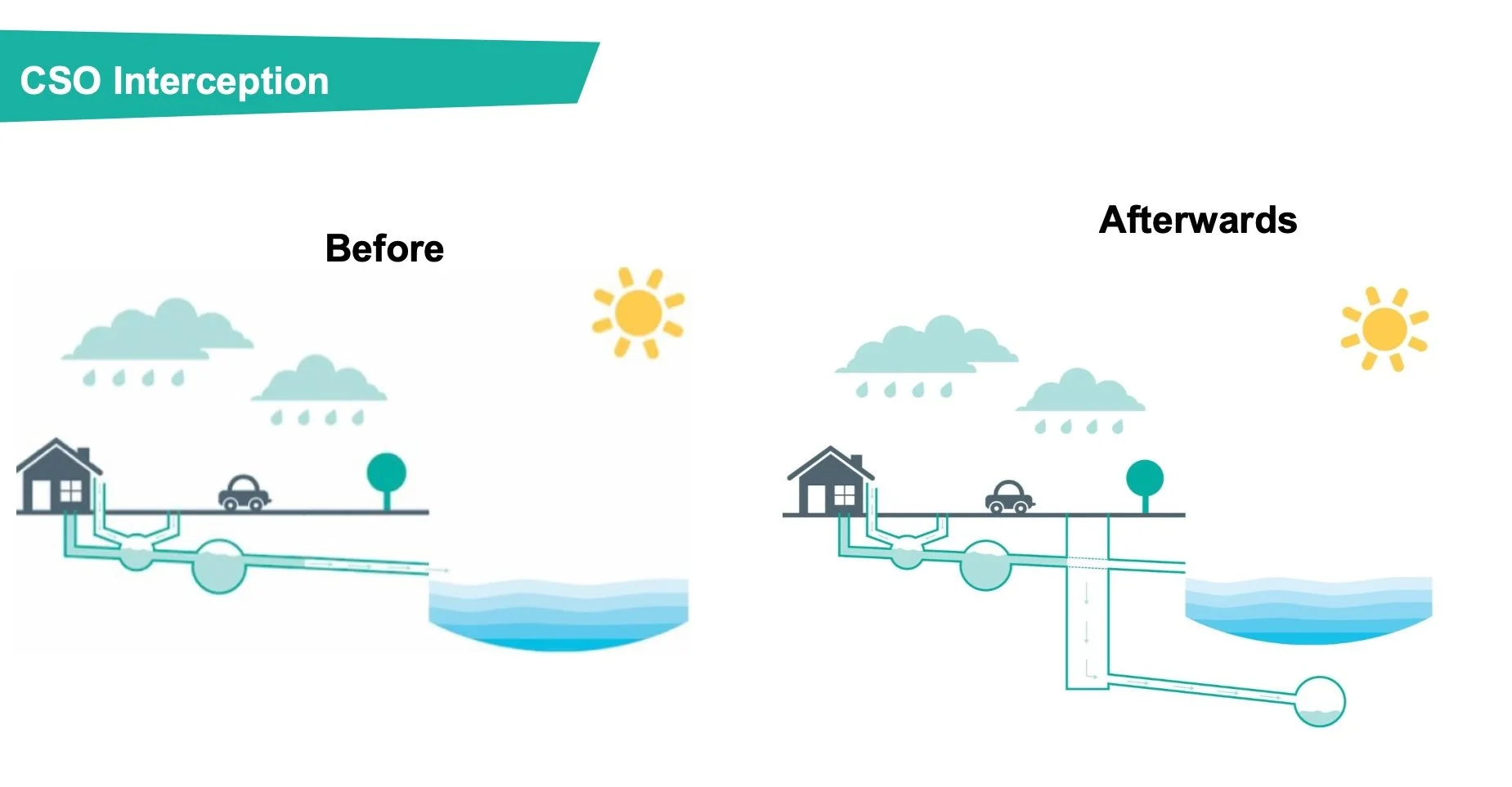
While Bazalgette's system was originally designed for a capacity of 4 million people in the 1860s, London's population has surged, with future projections reaching 16 million by 2160. Today, when it rains heavily, the system exceeds capacity, causing raw sewage and rainwater to flow directly into the Thames—an unacceptable issue that occurs, on average, once a week.
The super sewer solution
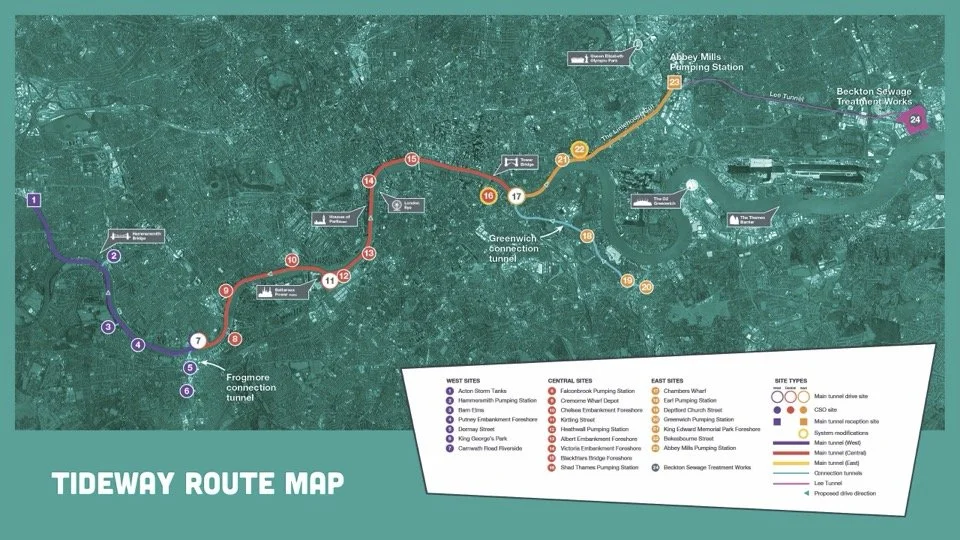
To intercept these Combined Sewer Overflows (CSOs), Tideway has constructed a massive 25km tunnel, measuring 7.2m in diameter and dropping to depths of between 30 and 66m.
Construction innovation: Six Tunnel Boring Machines (TBMs) were delivered from Germany to complete the tunnelling. The tunnel runs from Acton to Beckton, where the effluent is pumped up 60 metres at Abbey Mills to continue through the Lee Tunnel for treatment.
Safety and logistics: Remarkably, for a £4.5 billion project of this scale, nobody was killed during construction, reflecting an excellent safety record. Furthermore, to reduce road traffic and local infrastructure strain, 35% of the excavated spoil from the Greenwich Connection Tunnel was transported by river, via Deptford Creek, to Rainham Marshes to build a new RSPB area. Acoustic enclosures were also utilised at tunnel drive sites like Greenwich Pumping Station and Chambers Wharf, to minimise noise disruption for residents during 24-hour operations.
Local impact and discoveries
The project brings several tangible benefits and fascinating historical insights to our doorstep in East Greenwich:
Local infrastructure: The Greenwich Pumping Station has been significantly upgraded as part of the route.
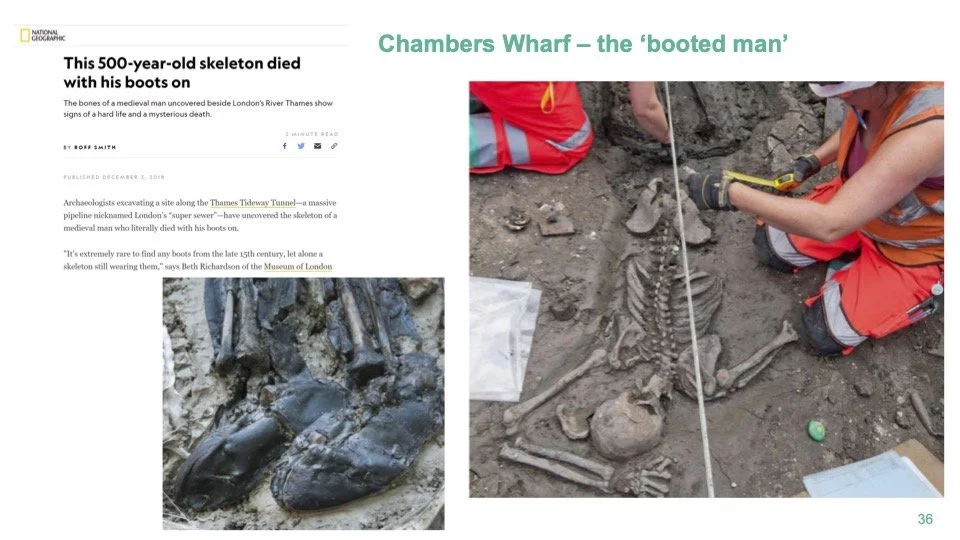
Heritage and archaeology: Excavations uncovered a 500-year-old skeleton, known as the "booted man," from the late 15th century, who was found still wearing his boots. Grooves in his teeth suggest he was likely a sailor or fisherman who frequently held twine in his mouth. Additionally, new signs around Deptford Creek have been installed to tell the story of the area's rich industrial heritage.
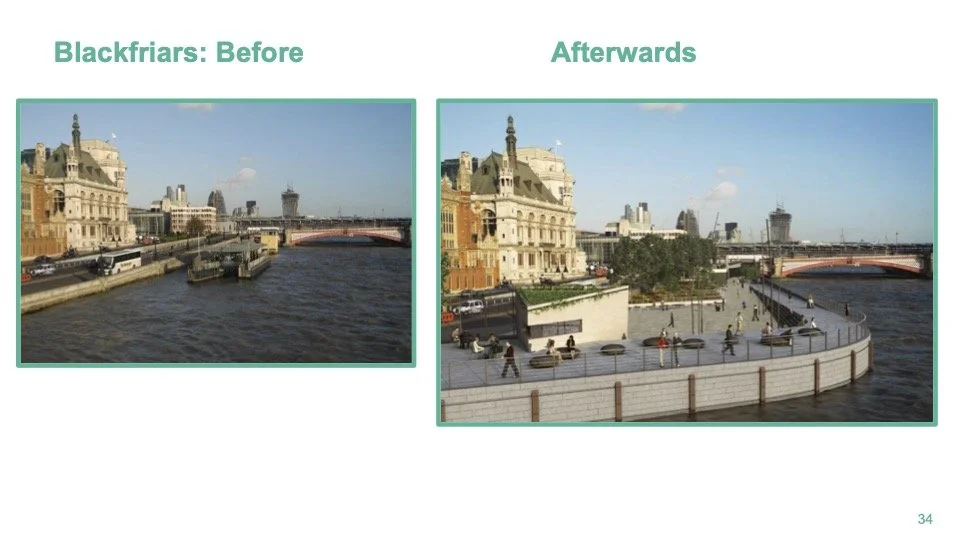
Environmental legacy: The project has created 3 hectares of new public realm at Blackfriars, Chelsea hospital, Putney and Wapping.
Collaborative working: Managing such a vast array of stakeholders and was a monumental task. This complex coordination is the subject of a UCL Bartlett School of Sustainable Construction report titled "Twenty Steps to Better Collaboration," which examines how project organisations and local authorities successfully bridged the gap.
A huge thank you to Martin for giving up his time to talk about such a wonderful topic. Thank you also to our friends at Enderby House for looking after all our members and donating the room for the evening.