
Overview of the Greenwich Peninsula ward local election hustings
Recently, the East Greenwich Residents Association (EGRA) and the Aldeburgh and Fearon Streets Neighbourhood Watch hosted a hustings event for the Greenwich Peninsula Ward.
Chaired by local vicar John Pout, the event provided voters with the opportunity to scrutinise the candidates and raise issues of particular concern ahead of casting their votes.
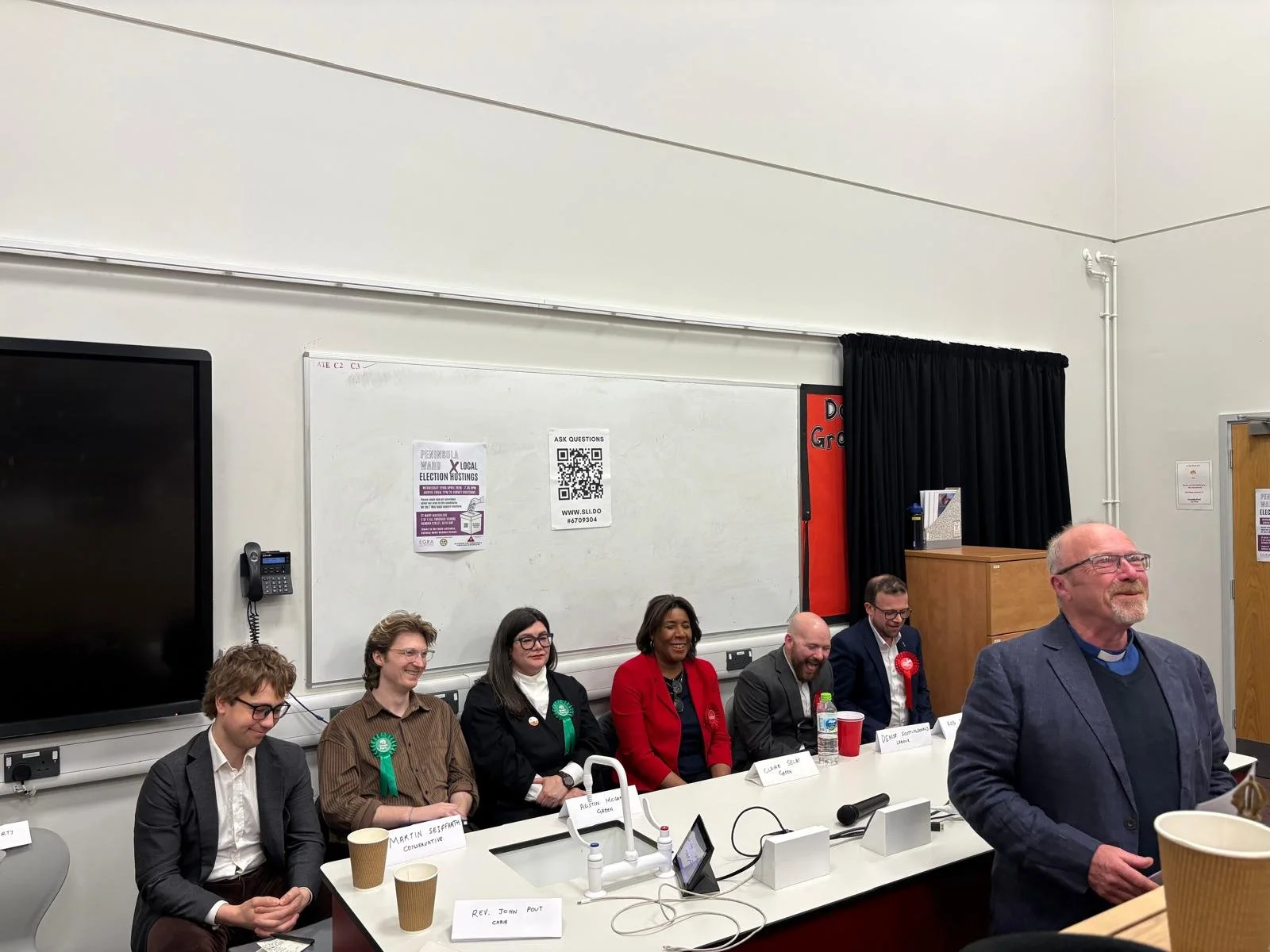
Chaired by local vicar John Pout, the event provided voters with the opportunity to scrutinise the local election candidates.
Life in Greenwich Peninsula
As a community-led organisation dedicated to improving the quality of life in East Greenwich, EGRA’s mission is to promote the social, economic, and environmental well-being of residents.
This hustings event allowed our community to hear directly from prospective representatives on how they plan to manage the rapid pace of development, ensure sustainable regeneration, and secure adequate infrastructure for our neighbourhood.
Detailed candidate positions
The Conservative Party (Martin Seiffarth)
Safety and crime: The Conservative candidate outlined public safety as their primary priority, committing to work closely with the Neighbourhood Watch to eradicate drug dealing, shoplifting, and robberies on the peninsula.
Development and infrastructure: They voiced strong support for EGRA's efforts to shape the neighbourhood plan. They noted that while they are not against development, it must be executed correctly without placing undue strain on existing residents, roads and facilities.
Accountability and transport: The candidates pledged to hold the current Labour council accountable for their treatment of road and pedestrian traffic. They specifically called for democratic decisions regarding Low Traffic Neighbourhoods (LTNs), a review of parking restrictions, and properly funded highways maintenance to fix potholes.
The Green Party (Austin McGrath and Claire Selby)
Housing and development: The Green candidates heavily criticised profit-driven mega-developments, arguing that the current system creates a deliberate two-tiered society that pushes locals out. They pledged to demand more power for residents and to ensure developer profits fund local GPs, schools, and buckling bus routes.
Environment and ecology: They advocated for consulting local ecologists, rather than just landscape architects, to design green spaces that actively reduce pollution and increase biodiversity. They also highlighted the need to improve active travel, expressing frustration that the Thames Path is frequently blocked or diverted to facilitate developers’ wishes and made inaccessible to cyclists and pedestrians.
Community welfare: Drawing on personal experiences with damp flats and absentee landlords, the candidates promised to tackle the affordability crisis and support renters. They also proposed exploring low-car neighbourhoods and enforcing dust mitigation laws on construction sites.
The Labour Party (Denise Scott-McDonald, Robert Stebbings and Nick Williams)
Community cohesion and youth services: Labour candidates focused on combating post-COVID loneliness by supporting community events and residents' associations. They committed to delivering dedicated youth provision, including opening a new youth hub on the peninsula to help young people thrive.
Traffic and air quality: The candidates highlighted their record of practical interventions, such as enforcing against heavy goods vehicle depots to reduce traffic on Woolwich Road. They also announced the imminent opening of a long requested pedestrian crossing on Peartree Way and committed to lobbying Transport for London for better bus connectivity.
Practical delivery and housing: They underscored their commitment to basic casework and local solutions including cracking down on fly-tipping. They pointed out that the Council's hands were tied by existing planning regulations on many large developments. They also highlighted the new Renters Reform Bill which will cap ground rents and end no-fault evictions for renters.
Community concerns and requested mitigation
Throughout the evening, EGRA members and local residents posed questions to the panel regarding the future of Peninsula. Key concerns included:
Infrastructure funding: Residents demanded a review of the Southern Park funding model, noting that the £150,000 cap is entirely funded by GMV leaseholders despite the park being used by thousands of neighbouring residents. Residents had been led to believe that the Southern Park would be taken over by the Council as development progressed and funded from local taxation.
Air pollution: The community sought tangible actions on how developers will be held accountable for construction dust and how pollution from idling vehicles and aggregates will be mitigated.
Public services and safety: Residents raised urgent concerns over crowd control at local bus stops during school pickup times and the ongoing shortage of GPs on the peninsula. There was also concern about the anti-social behaviour arising from the many Airbnb propertiesand the lack of effective policing.
EGRA remains committed to ensuring our community's voice is heard as these developments and policies unfold. We will continue to hold all elected officials accountable to the promises made during this event.
For more information or to support our efforts, contact info@egra.london.