
Why cutting the 386 bus frequency is a problem for East Greenwich
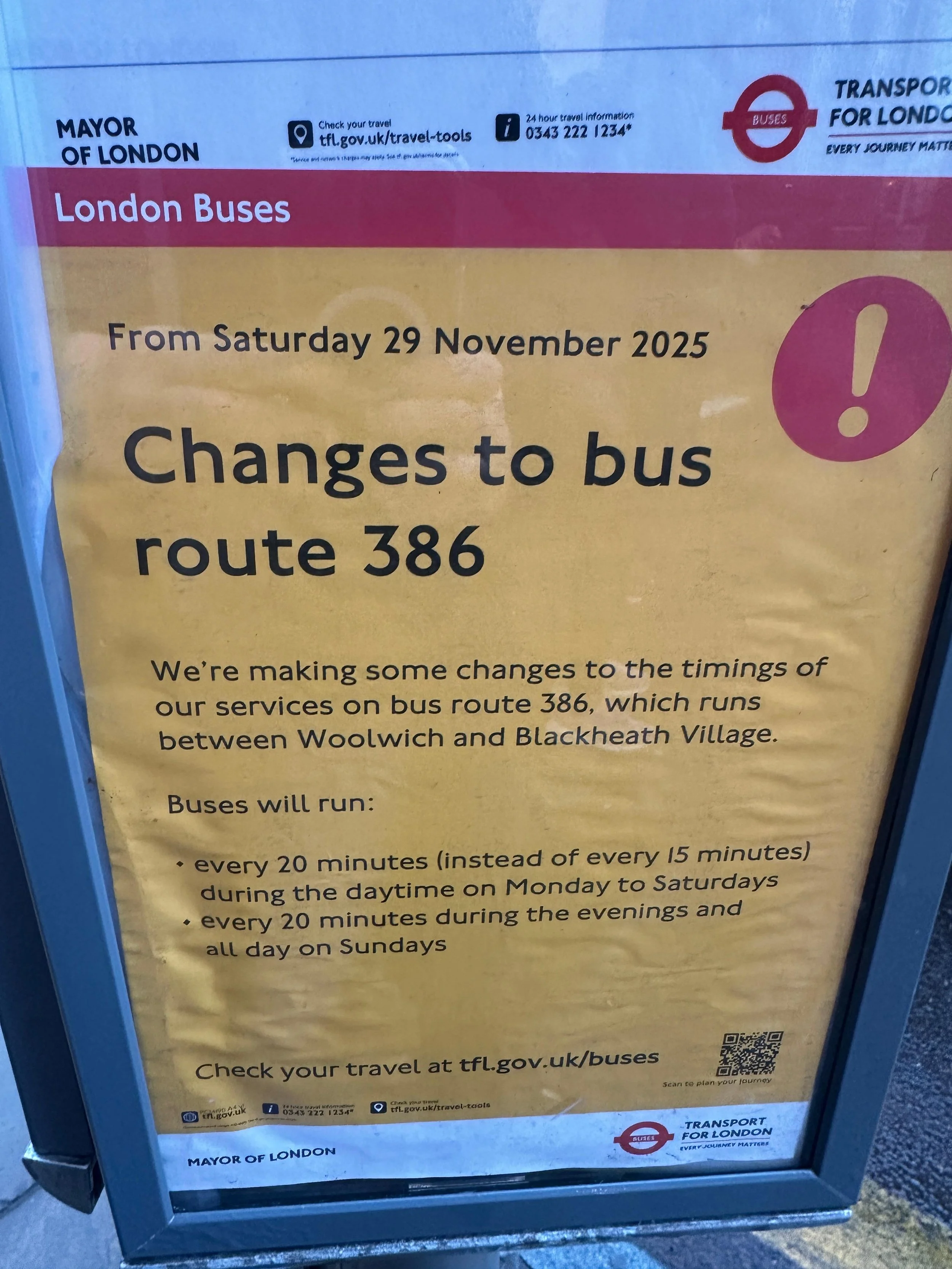
TfL plans to cut the 386 bus timetable from 15 minutes to 20 minutes during the daytime from Monday to Saturday. On paper this looks minor. For East Greenwich and Blackheath, the 386 is one of the most important routes in the area, so this change matters.
The 386 is the only bus that links Blackheath, East Greenwich and key residential streets that have no other public transport. It is also the only direct bus route to the Queen Elizabeth Hospital, which makes this cut more than an inconvenience. It risks leaving residents, carers and patients with a worse, slower and less reliable service.
Below is a summary of the concerns.
A key route to Queen Elizabeth Hospital
For many residents, the 386 is the only practical way to reach the hospital. The alternatives involve long, steep walks, difficult interchanges or routes that are already overcrowded. The hospital is not optional. It is essential for older people, people with disabilities, parents with young children and anyone attending appointments.
Fewer buses mean:
longer waits in all weather
longer travel times for those with mobility issues
delays for people attending treatment, shift changes or visiting hours
Cutting frequency on a hospital route should not be an option.
Already one of the most unreliable routes in Greenwich
Regular users already report:
buses running in pairs
long gaps in the timetable
missing “ghost” buses
difficulty planning connections
Stretching the timetable to every 20 minutes amplifies these problems. A 20-minute service on paper easily becomes a 30-40 minute wait in practice. For early morning, late evening and winter travel this is not acceptable.
The only bus serving East Greenwich and Blackheath backstreets
Large parts of East Greenwich and Blackheath have no other buses at all. The 386 serves:
Maze Hill
Westcombe Hill
Greenwich Park slopes
residential streets where many older residents live alone
The 386 is not like a trunk route with alternatives nearby. If it becomes less reliable, entire areas effectively lose access to public transport.
Care workers rely on the 386 to move between shifts
Local care workers use the 386 to reach clients in East Greenwich, Blackheath and Woolwich. Their working patterns often rely on tight travel windows. A shift from 15 to 20 minutes might not sound significant, but for workers paid by the minute and working across several homes a day, this makes their jobs harder and increases the chance of late or missed calls.
These roles already face huge pressure. Cutting the main route they depend on adds to that burden.
Sundays and evenings become harder too
The move to a 20-minute service all day on Sundays and in the evenings means:
less flexibility for hospital visiting hours
harder travel for shift workers
fewer safe options for travel after dark
This cut works against Greenwich’s own transport goals
Greenwich Council has spent years arguing for:
reduced car use
better active travel
more reliable public transport
Cutting frequency on a bus route with no alternatives does the opposite.
What we want
Keep the 15-minute daytime frequency Monday to Saturday
Review reliability issues and headway management
Commit to protecting hospital-linked routes from cuts
Publish usage data so residents can understand the basis for the decision
Work with local groups to improve the route, not reduce it